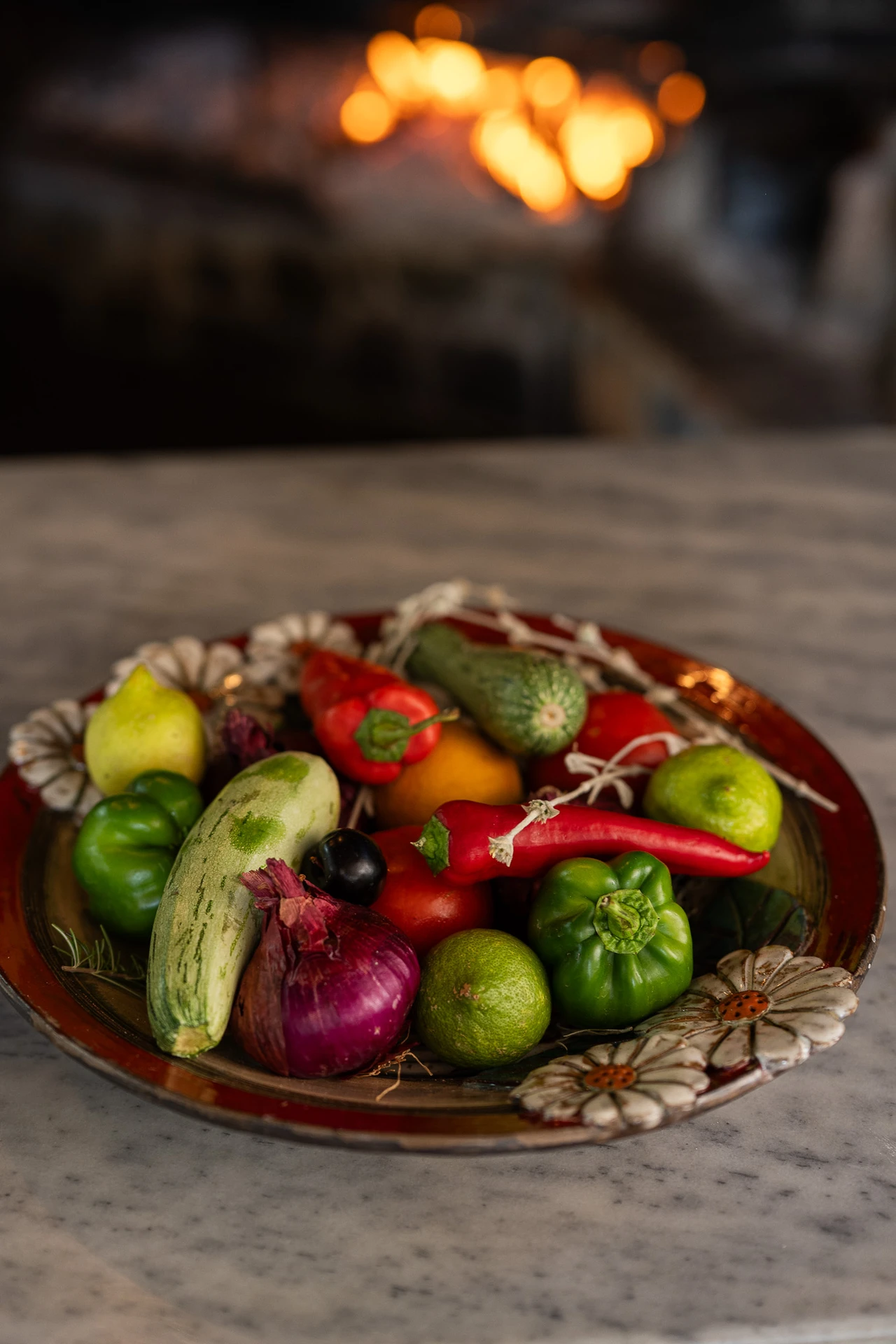
The Cretan Diet is not simply a way of eating.
It is a way of living in relationship with the land.
Long before it became the subject of study, admiration and international recognition, the Cretan Diet existed as everyday wisdom. It was shaped through simplicity, seasonality, care and the deep connection between people and the natural environment.
In Crete, gastronomy does not begin with a recipe.
It begins with the soil.
It begins in the olive groves that give olive oil. In the wild greens that grow between the stones. In the herbs that bring aroma to food and tea. In the fruit, legumes, grains, honey, wine and all those simple ingredients that, over time, have formed one of the most authentic gastronomic identities in the Mediterranean.
The recognition of Crete as European Region of Gastronomy awarded 2026 highlights exactly this deeper truth: Cretan gastronomy is not only about taste. It is culture, memory, hospitality, biodiversity and a way of life.
The Cretan Diet is often described as the heart of the Mediterranean diet, not because it relies on complex techniques or impressive presentations, but because it is based on something far more essential: the quality of ingredients and respect for the natural rhythm of the land.
Ingredients are used when they are in season.
Flavours remain clean.
Combinations are simple, yet full of meaning.
Food is prepared with time, care and knowledge.
This simplicity is perhaps the greatest strength of Cretan cuisine. It does not try to impress. It nourishes. It connects. It remembers.
At the Cretan table, food is never only food. It is a reason to gather. It is conversation, hospitality, sharing and human connection. It is the way a place expresses its character without needing to explain it.
A dish of wild greens, a little olive oil, bread, cheese, honey or a glass of wine is not simply a meal. It is a story. It speaks of the landscape, the seasons and the people who cultivated, gathered, cooked and offered it.
This is why the Cretan Diet remains a living cultural heritage. It does not belong only to the past. It continues to exist in the present, in every table where food is offered with respect, in every product that carries its origin, in every experience that connects flavour with place.
Within this connection between land, nature and gastronomy, the Botanical Garden of Crete holds a special role.
Because the Botanical Garden does not present Cretan gastronomy as something separate from its origin. It brings it back to where it truly begins: nature.
Visitors walk among trees, herbs, fruits, aromas and plants. They see, touch and sense the environment that gives birth to flavour. They understand that the herb in the cup, the olive oil on the plate, the honey, the fruit and the wine are not simply products. They are expressions of a place.
The experience at the Botanical Garden of Crete reminds us that gastronomy cannot exist without biodiversity. Without plants, seasons, pollination, water and care for the natural environment, there can be no authentic food culture.
Crete, with its extraordinary natural richness and great variety of plant species, offers a unique field for understanding this relationship. The flavour of the island is not accidental. It is the result of climate, soil, light, wind, cultivation and knowledge.
And this knowledge is not found only in books.
It lives in everyday practices.
In when a herb is gathered.
In how a wild green is used.
In how a fruit is preserved.
In how a simple ingredient becomes nourishment, care and hospitality.
The Cretan Diet is not a static tradition. It is a living organism. It changes, evolves and speaks to the present, without losing its core. And that core remains the same: respect for the land, clarity of ingredients, moderation, seasonality and sharing.
At the Botanical Garden of Crete, this philosophy becomes an experience. You do not simply read about it. You walk through it. You smell it. You taste it. You connect it with images, sounds, aromas and memories.
A garden can explain gastronomy in a way that words alone cannot fully capture. Because it shows the beginning. It shows the root. It shows that behind every flavour, there is a place that gives it life.
The Cretan Diet is valuable precisely because it does not separate food from life. It connects food with health, nature, community, hospitality and culture. It is not only about what we eat. It is about how we live, how we share, how we respect and how we remember.
And perhaps this is why it continues to move and inspire people from around the world.
Because in Crete, gastronomy is not simply an experience of taste.
It is an experience of place.
It begins in the land.
It passes through human hands.
It reaches the table.
And it becomes memory.
The Botanical Garden of Crete stands within this story as a living place of understanding the Cretan Diet. A place where nature, biodiversity, seasonality and hospitality meet, reminding us that the gastronomy of Crete is not simply something you taste.
It is something you experience.