.
Gastronomy is not only the food that reaches the table.
It is the way a place tells its story.
Through its products, its crops, its seasons, its traditions, its people and its relationship with nature, every region shapes its own gastronomic identity. An identity that is not only about taste, but also about culture, daily life, hospitality, sustainability and memory.
Crete’s recognition as European Region of Gastronomy awarded 2026 is an important acknowledgement of this identity. It is not simply a title. It is an opportunity to present Crete as a place where gastronomy remains deeply connected with the land, nature and the way of life of its people. The official Crete 2026 page describes the island through its long cultural history, its Cretan Diet, its biodiversity, its hospitality and its living dietary heritage.
The European Region of Gastronomy title, guided by IGCAT, highlights regions that use gastronomy not only as a tourism asset, but as a driver of cultural, social and environmental development. Its goals include raising awareness of cultural and food uniqueness, encouraging gastronomic innovation, supporting culinary education, improving sustainable tourism standards, strengthening circular economies and supporting community and environmental well-being.
In other words, the institution does not treat gastronomy as an isolated experience of consumption. It sees it as an entire ecosystem. An ecosystem that includes agriculture, production, local knowledge, education, hospitality, culture, the protection of natural resources and sustainable development.
For Crete, this approach has particular meaning.
Because Cretan gastronomy has always been more than cuisine.
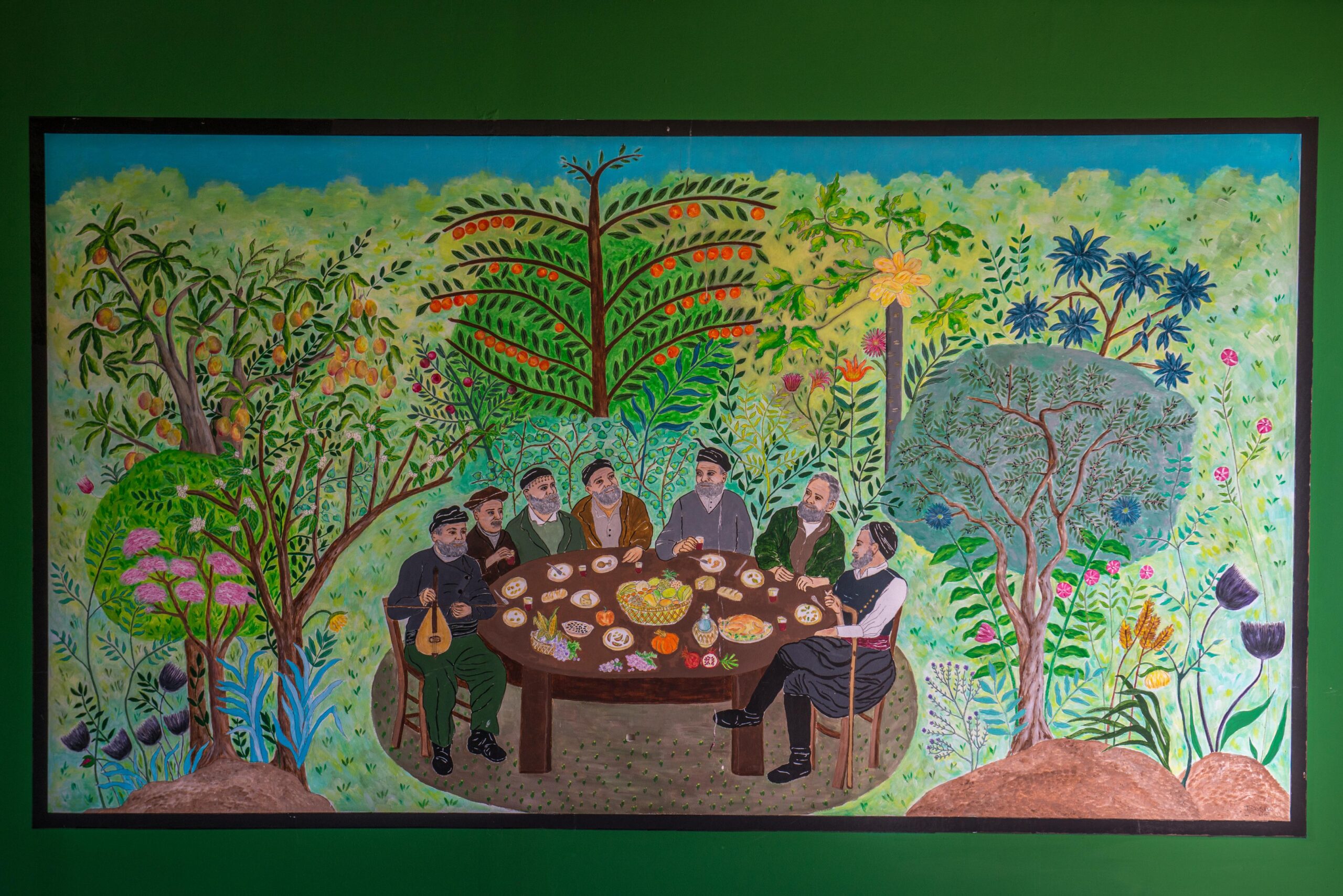
It is a way of life shaped through centuries of relationship with the land. From olive groves and vineyards to wild greens, herbs, honey, legumes, grains, fruit and the products of each season, the Cretan Diet remains deeply rooted in the island’s natural environment.
Crete carries a history of thousands of years. From the dawn of the Minoan civilization to the present day, the island maintains a rare continuity between tradition and contemporary life. This continuity is not found only in monuments or stories of the past. It is also found at the table. In the way people cook, offer, share and honour food. The official Crete 2026 page refers to Crete’s 4,000 years of history and describes the Cretan Diet as one of the most treasured elements of the island’s cultural heritage.
The Cretan Diet, often described as the heart of the Mediterranean diet, is not based on excess. It is based on quality, simplicity, seasonality and a deep knowledge of raw ingredients. It is a diet that does not try to impress. It nourishes. It connects. It keeps alive the relationship between people and place.
This is why the Crete 2026 recognition is not only about restaurants, producers or local products. It is about the island’s whole identity. It is about biodiversity, hospitality, cultivation, local knowledge, sustainable experience and cultural memory passed from one generation to the next.
Within this story, the Botanical Garden of Crete holds a natural and meaningful place.
Because the Botanical Garden shows, in the most direct way, that gastronomy does not begin on the plate. It begins in the land. In the plant, the herb, the tree, the fruit, the aroma, the soil, the water, the light and the rhythm of the seasons.
A visitor to the Botanical Garden does not simply discover a beautiful natural space near Chania. They enter a living environment where biodiversity, cultivation, flavour and environmental awareness are connected. Here, nature is not a background. It is the beginning of the experience.
This is also the deeper meaning of the European Region of Gastronomy title: to show that the gastronomy of a place cannot be separated from its environment. Authentic flavour cannot exist without landscape, production, seasonality, respect for nature and the people who preserve this relationship.
Crete, with its rich plant diversity and distinctive natural environment, has all the elements needed to express this philosophy. The official Crete 2026 page notes that the island is home to more than 1,800 plant species and connects this biodiversity with the production of outstanding local goods.
The flavour of the island is not accidental. It is the result of climate, soil, light, air, cultivation and experience. It is the result of a long coexistence between people and nature.
The same applies to hospitality. In Crete, the table is not only a place for food. It is a place of human connection. It is where people meet, share, talk and create memories. Gastronomy becomes a social act. It becomes communication. It becomes culture. The official Crete 2026 page also describes the Cretan table as a space for sharing ideas, relationships, emotions and communication, with hospitality at its centre.
Through the European Region of Gastronomy title, Crete has the opportunity to speak to Europe and the world not only about what it produces, but about what it represents. To show that Cretan gastronomy is not an image to be consumed, but a living experience of place.
An experience that begins in nature.
Continues through cultivation.
Passes through human hands.
Reaches the table.
And becomes memory.
The Botanical Garden of Crete expresses this journey in a sensory and meaningful way. Through the walk, the plants, the herbs, the aromas, the restaurant, the Tea Bar, the flavours and the organised experiences, visitors understand that the gastronomy of Crete is not only something to taste. It is something to experience with all the senses.
This is why Crete’s recognition as European Region of Gastronomy awarded 2026 has value beyond visibility. It is a reminder that gastronomy can act as a bridge between tradition and the future. Between nature and culture. Between the visitor and the place.
And in Crete, this bridge has deep roots.
Roots in the land.
Roots in memory.
Roots in hospitality.
Roots in culture.
Because when gastronomy is not treated simply as taste, but as a way of life, a place is not merely presented to the visitor.
It is revealed.