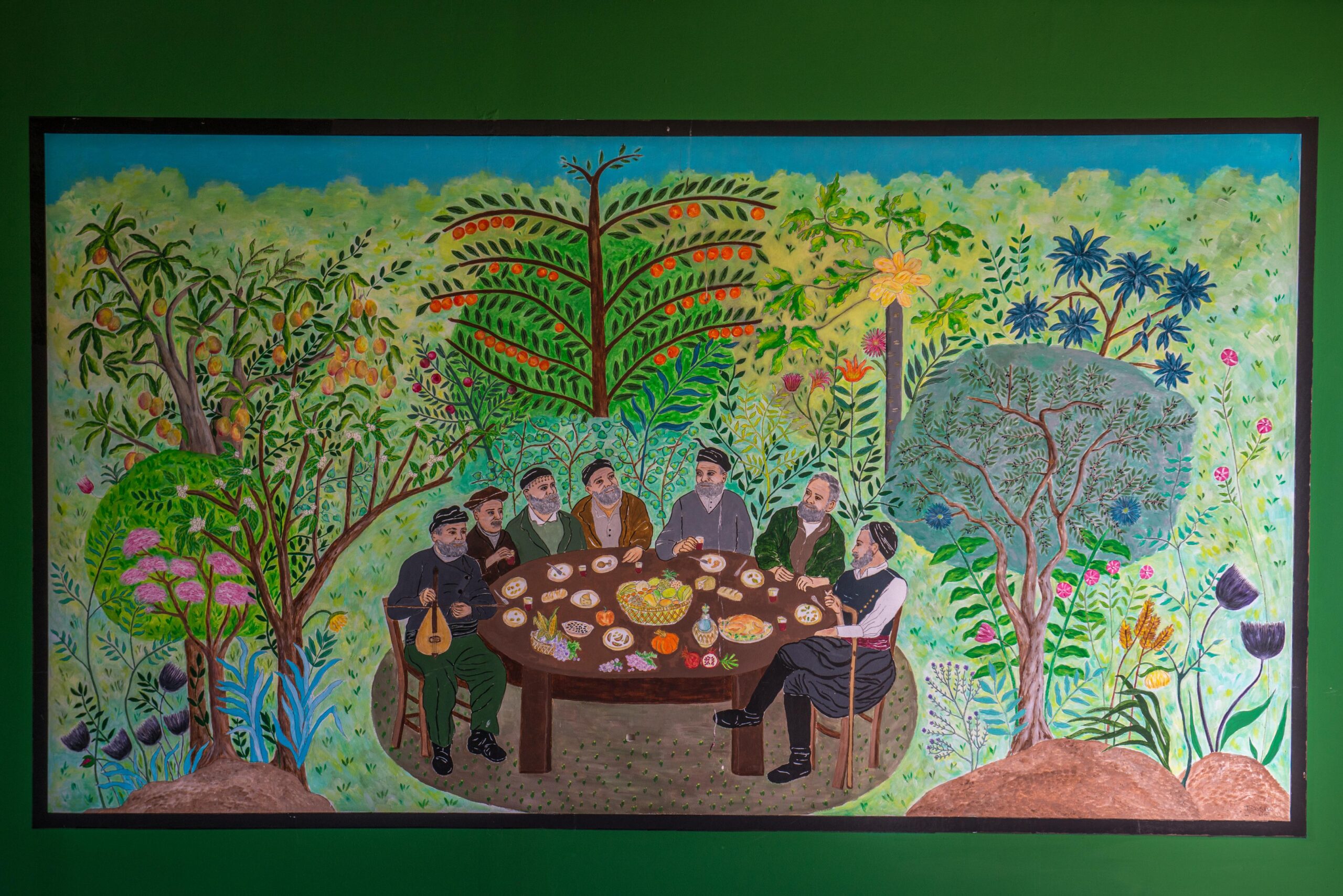
The flavour of a place is not born only in the kitchen.
It is born in the landscape.
In the soil, the light, the water, the air, the plants, the herbs, the fruits and the rhythm of the seasons. Before an ingredient becomes part of a recipe, it has already existed as part of an ecosystem. It has grown within a specific environment, shaped by climate, land, season and human care.
In Crete, this relationship between nature and gastronomy is profound. The island is not only known for its cuisine. It is known for its natural richness, for the aromas of its land, for its wild greens, herbs, olive trees, vineyards, fruits, honey and products that are born within a unique Mediterranean environment.
Crete is home to more than 1,800 plant species, making it a place of exceptional biodiversity. This natural variety is not simply an environmental characteristic. It is the foundation on which the island’s gastronomic identity has been built over the centuries.
Because Cretan gastronomy cannot be separated from the nature that gave birth to it.
The herbs that bring aroma to food and tea.
The wild greens that became part of everyday nutrition.
The olive oil that stands at the centre of the table.
The honey that carries within it the journey of the bee from flower to flower.
The fruits, nuts, vegetables and vineyards that follow the rhythm of the seasons.
These are not simply ingredients.
They are expressions of a place.
Biodiversity is the invisible root of flavour. It is what gives products character, aroma, intensity, memory and authenticity. When a place has rich flora, it also has a rich gastronomic language. It has more ways to express itself through taste, more raw materials, more traditions and more memories.
In Crete, this language was shaped through the everyday relationship between people and their environment. People learned to observe the land. To know when a wild green is in season. Which herb is used in food and which in tea. Which fruit ripens under the summer sun and which product needs time, patience and care.
This knowledge was never only theoretical.
It was lived.
It passed from generation to generation through cultivation, gathering, cooking, sharing and everyday life.
The Botanical Garden of Crete stands exactly at this meeting point: where biodiversity becomes experience and gastronomy returns to its source.
Visitors do not simply see plants. They see the beginning of flavour. They walk among trees, herbs, aromas, fruits and plant species that reveal the close relationship between nature and food. They understand that what later reaches the table has first existed as leaf, flower, root, fruit, scent and season.
Here, gastronomy is not presented separately from its environment. It is connected with the land, cultivation, seasonality, the protection of natural resources and the deeper need to keep the relationship between people and nature alive.
Protecting biodiversity is not only an environmental issue.
It is also a gastronomic issue.
Because when plants, varieties, ecosystems and natural balances are lost, we do not lose only a part of nature. We also lose a part of a place’s memory. We lose flavours, practices, knowledge, habits and ways of life.
Cretan gastronomy is valuable precisely because it keeps this memory alive. It is not built on excess, but on understanding the ingredient. It does not try to distance food from its origin, but to keep it close to it. It reminds us that every flavour has a root, every aroma has a season, every product has a journey.
This is why Crete’s biodiversity is an essential part of its gastronomic identity. Without the land, the herbs, the wild plants, the cultivated fields, the bees, the trees, the water and the light, the flavour would not be the same. The cuisine would not be the same. The memory would not be the same.
At the Botanical Garden of Crete, this truth becomes visible.
Nature is not a background.
It is the beginning of the story.
Through the walk, the aromas, the plants, the restaurant, the Tea Bar and the organised experiences, visitors can understand gastronomy as something much broader than taste. As a relationship with the landscape. As knowledge. As care. As culture.
As European Region of Gastronomy awarded 2026, Crete has the opportunity to highlight this connection with even greater clarity: that its gastronomy is not only the result of recipes, but of an entire natural and cultural ecosystem. Its identity is shaped by biodiversity, seasonal ingredients, herbs, simplicity, hospitality and the deep relationship between people and place.
And this is perhaps the most essential message:
the flavour of a place cannot exist without the place itself.
Gastronomy needs the land.
The land needs care.
And care needs memory, knowledge and responsibility.
The Botanical Garden of Crete reminds us of exactly this. That biodiversity is not something distant or abstract. It exists in the cup of tea, in the aroma of the herb, in the olive oil, in the honey, in the fruit, in the plate, in the visitor’s experience.
Because in Crete, gastronomy begins in nature.
And when nature is protected, flavour has a future.